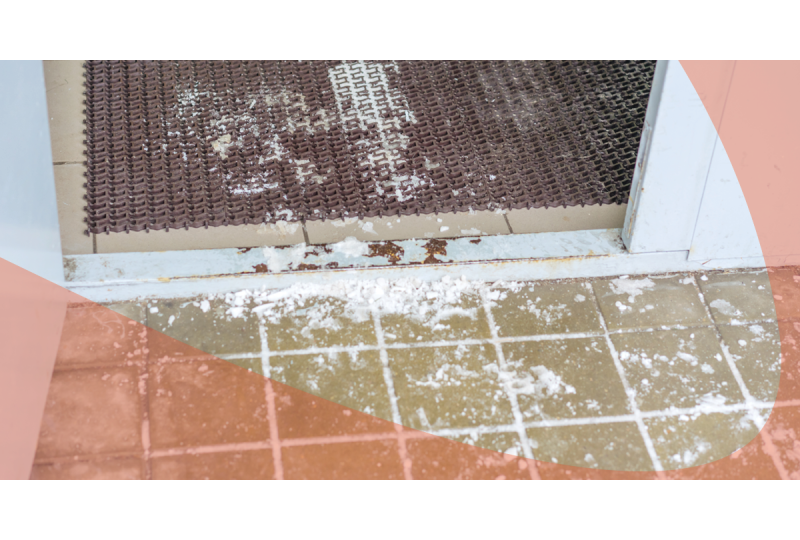
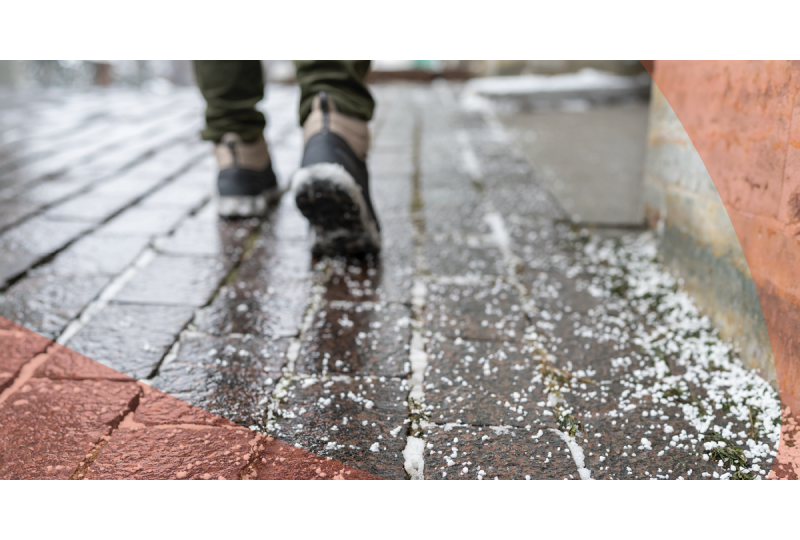
Canadians know too well the damage of salts on our roadways and cars. They seep into and corrode porous materials, including pavement, concrete, and matting. Many of us have reluctantly accepted that this is part of keeping our shared pathways clear and safe. Without it, your customers, guests and family could easily slip and fall.
Are there ways to de-ice your walkways without doing damage? There are various products and innovations, so preparing the appropriate ice-melting solutions for the first snowfall is essential.
What is Rock Salt?
Rock salt (or sodium chloride) works by lowering the freezing point of water, creating a brine solution that flows beneath the snow and ice and breaks the bond. The salt has to become "wet" to make this brine, so it starts losing effectiveness at -9°C.
Rock salt is cost-effective to start; however, it requires a lot of labour to stay on top of tracked residue - mopping and shovelling away remaining salt. Not to mention repairing and replacing damaged surfaces.
The structure of the salt helps provide traction, but the crystals grind into surfaces and damage concrete, pavement, and flooring over time. It also negatively affects plants and animals. If ingested, it can cause gastrointestinal issues and is irritating to paws.
Pros: Instant traction, cheaper upfront
Cons: Doesn't work in colder temperatures, toxic to plants & animals, corrosive to surfaces
What is Ice Melt?
Ice Melt is a de-icer made from a combination of ingredients; a portion of sodium chloride (salt), typically alongside calcium chloride to work in colder temperatures, and magnesium chloride to reduce damage. While ice melt is generally less corrosive than rock salt, it still can affect surfaces over the long run.
Calcium chloride: best for colder temperatures
Magnesium chloride: environmentally conscious
Pros: Fast acting in cold temperatures, safer for plants & animals, takes longer to damage surfaces than salt
Cons: More expensive upfront; not all provide traction.
Which is better - ice melt or rock salt?
Your particular requirements determine this. Here are some key considerations:
What's your particular climate?
If you are in an area with extreme temperatures and have a history of icy conditions, it's best to choose an ice melt. Swish Ice Rid+® Ice Melter is treated with FS2000 to melt faster in lower temps up to -32°C. It is also safe for children, pets, and plants, won't burn the skin, won't damage metal or concrete, and has been awarded a Safer Choice designation.
What is your budget?
While salt is much cheaper upfront, you must consider which surfaces you will use the melt on and what is required—having someone on hand to mop the floors and remove the residue repeatedly can outweigh initial investments. Using melts with fewer chlorides like Firestorm Free™ can help to preserve your surfaces. It is readily biodegradable, making it safer for flora and fauna, and it is also non-corrosive and safe on concrete. It is one of the few ice melts available that can contribute to LEED® points* in Canada and the U.S.
Do you have particular safety concerns?
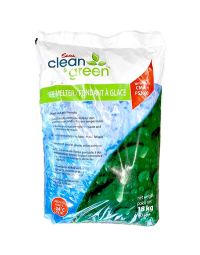
Having traction from the salt helps unsteady steps but can be highly damaging if you have any plant or animal life nearby. We have developed Swish Clean & Green® Ice Melter to improve traction and increase the safety of pedestrian and vehicle traffic while being gentle on vegetation, plants, concrete, floors, carpeting, and leather.
Effective Use
Whether you choose salt or ice melt, the effectiveness and impact depend greatly on how you use them. It's important to get expert guidance on application techniques, timings, and post-cleaning protocols. Swish representatives would be happy to discuss the different options based on your application and temperature requirements.
* This does not suggest that the product is approved by the CaGBC or the LEED® program